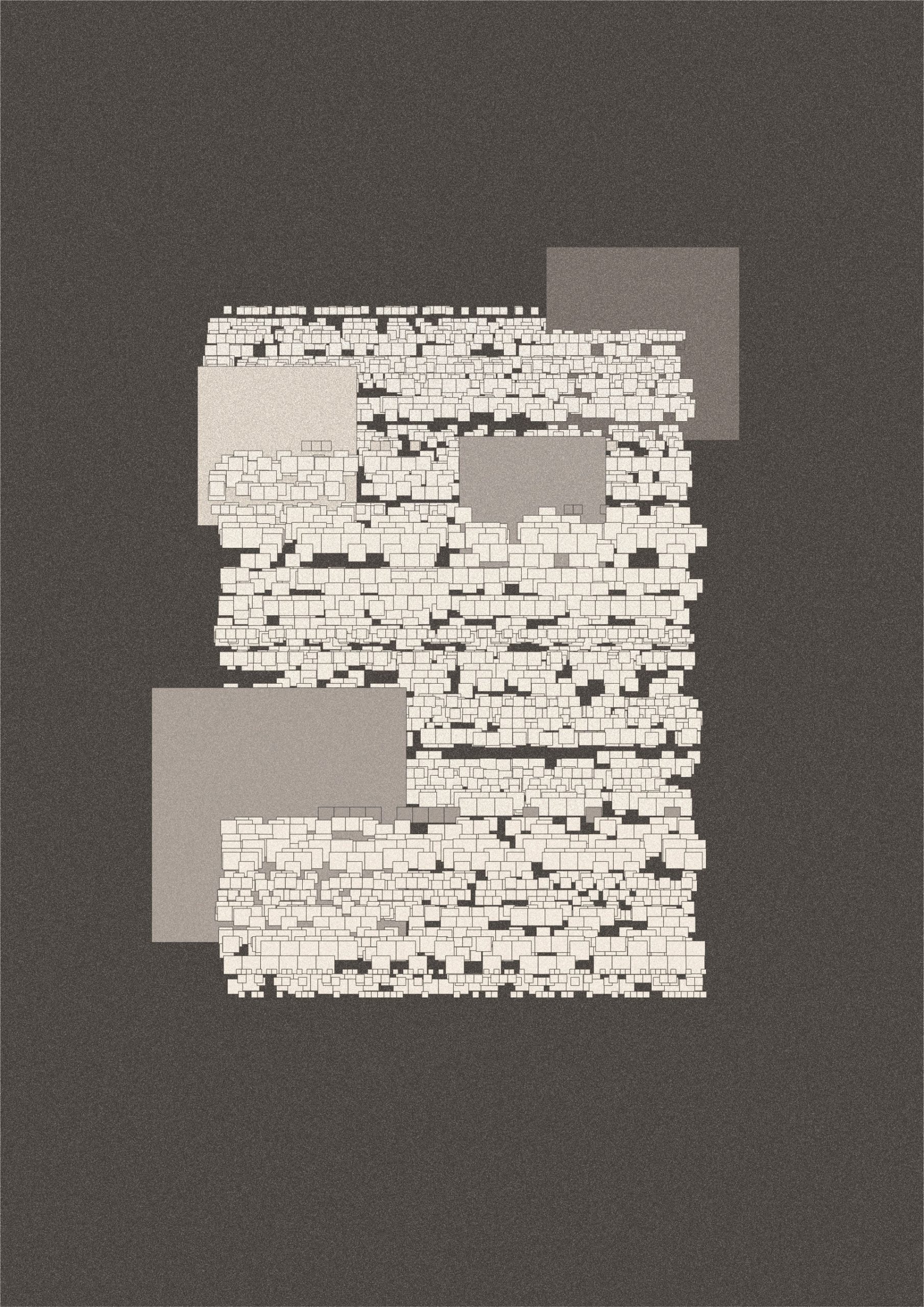
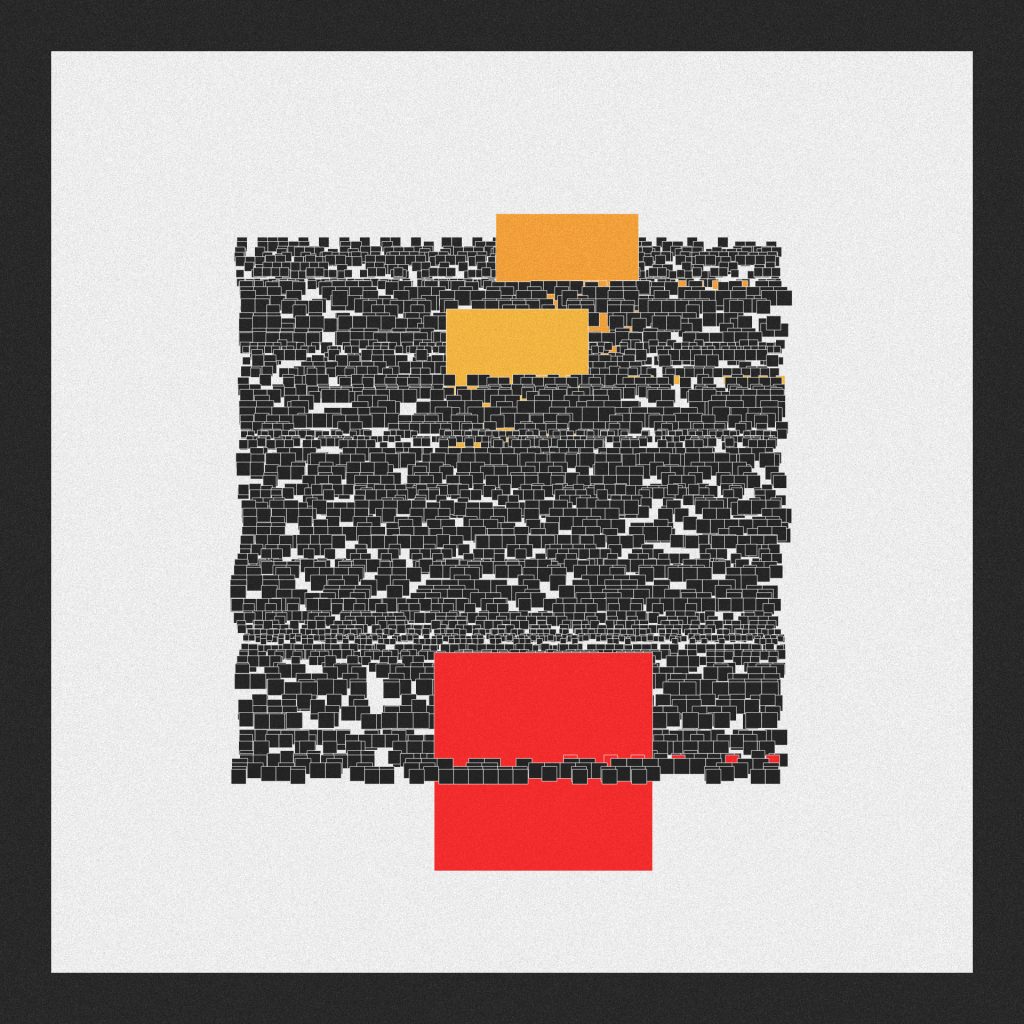
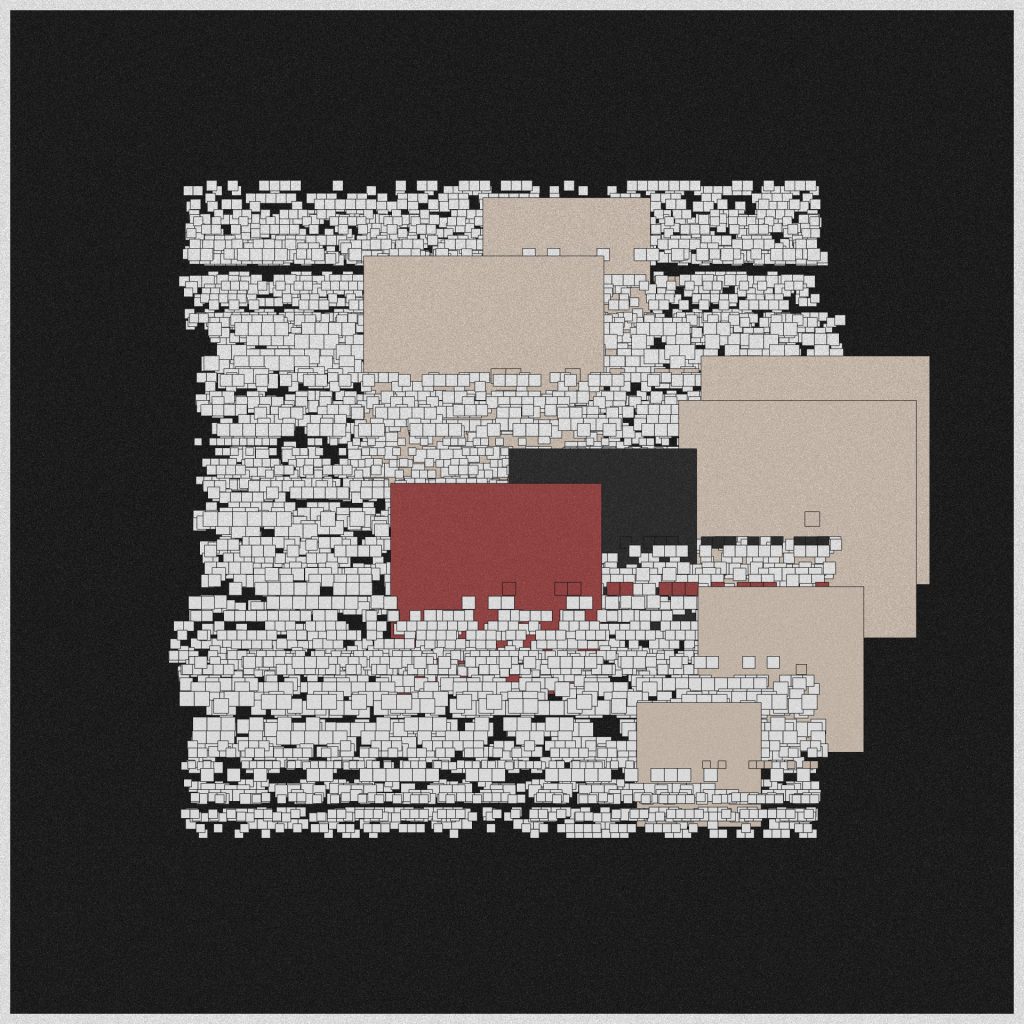
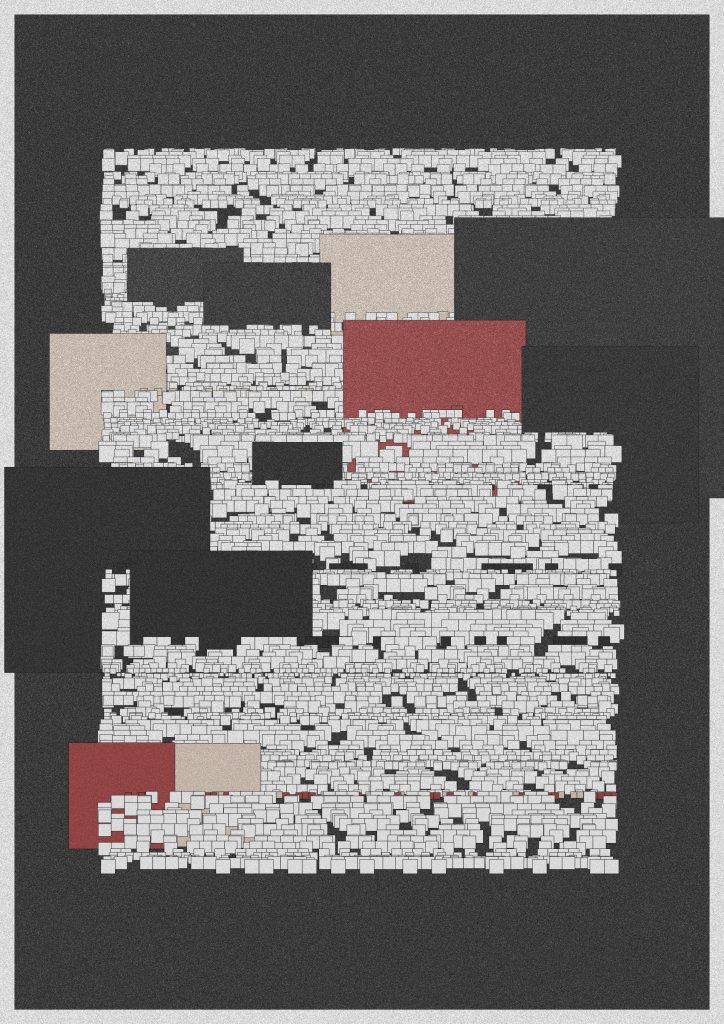
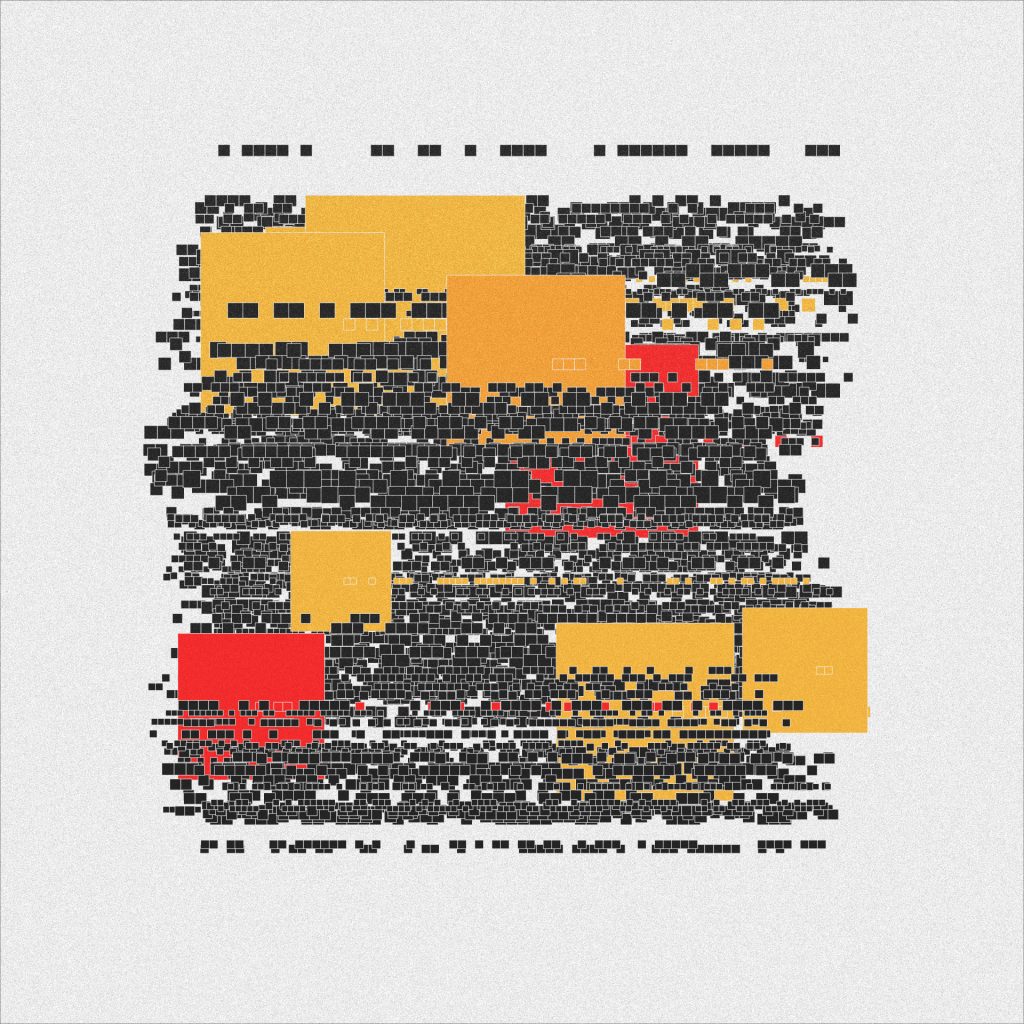
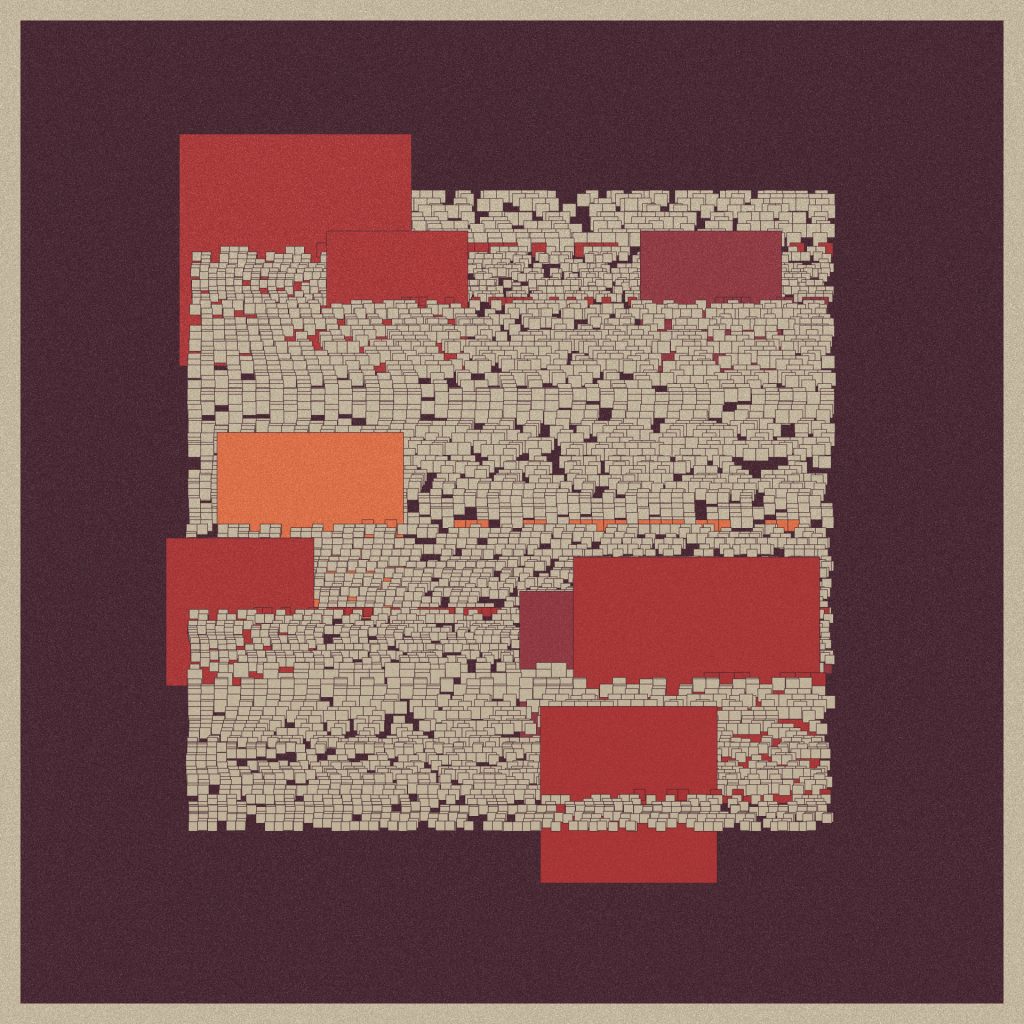
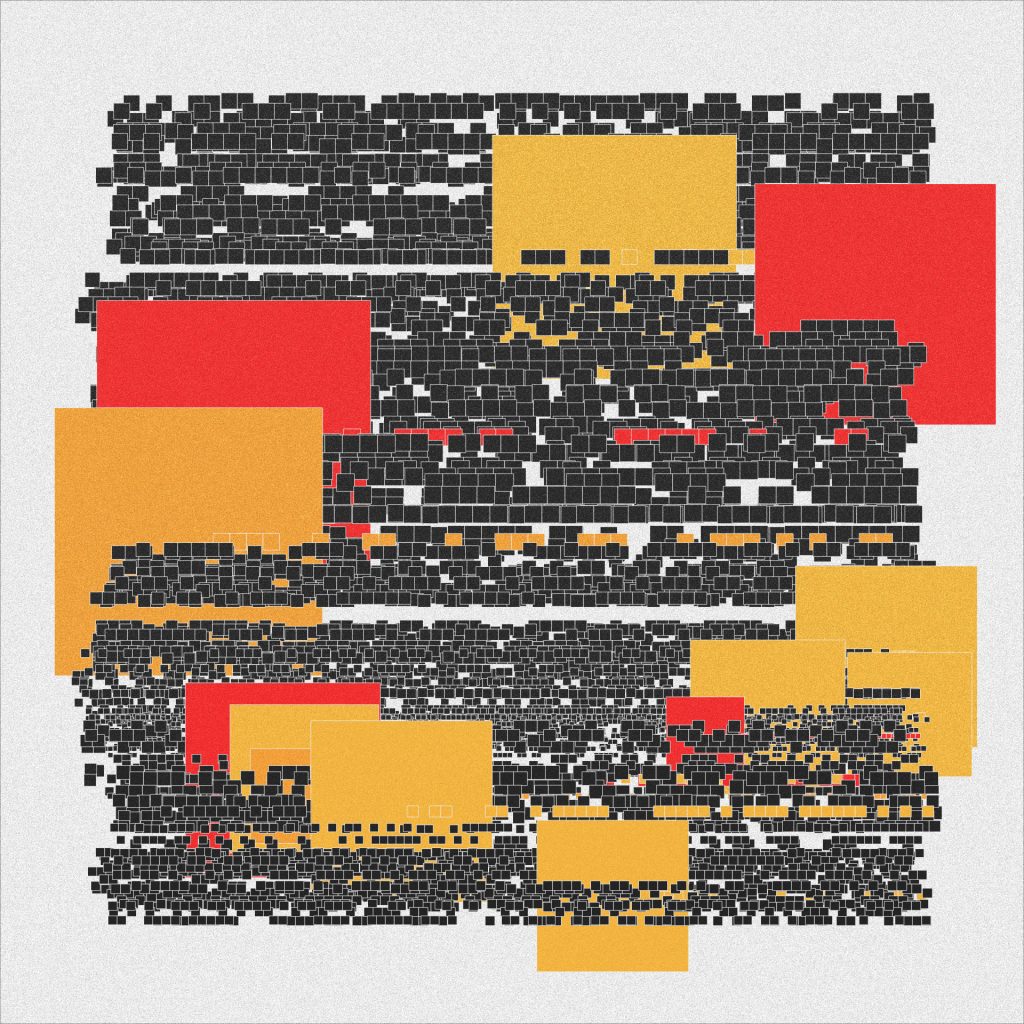
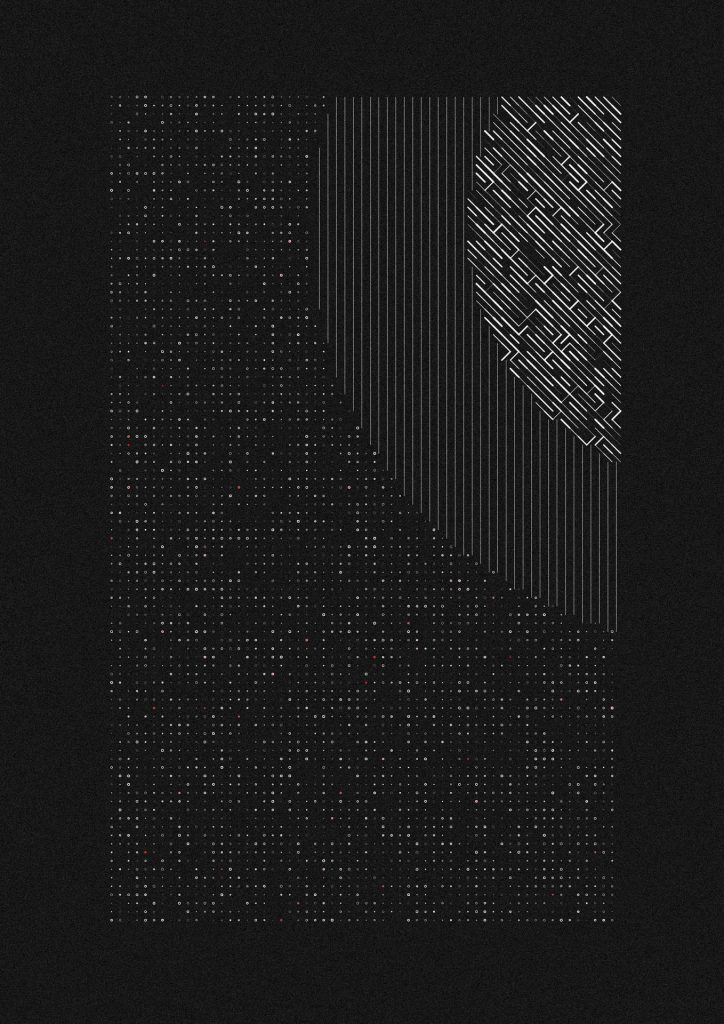
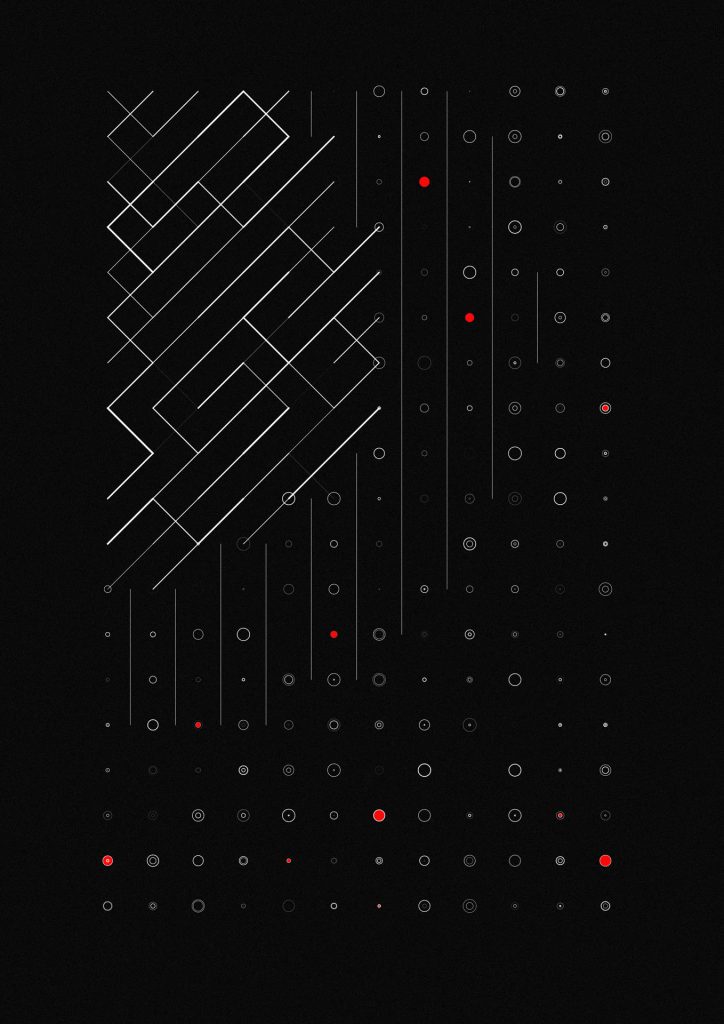
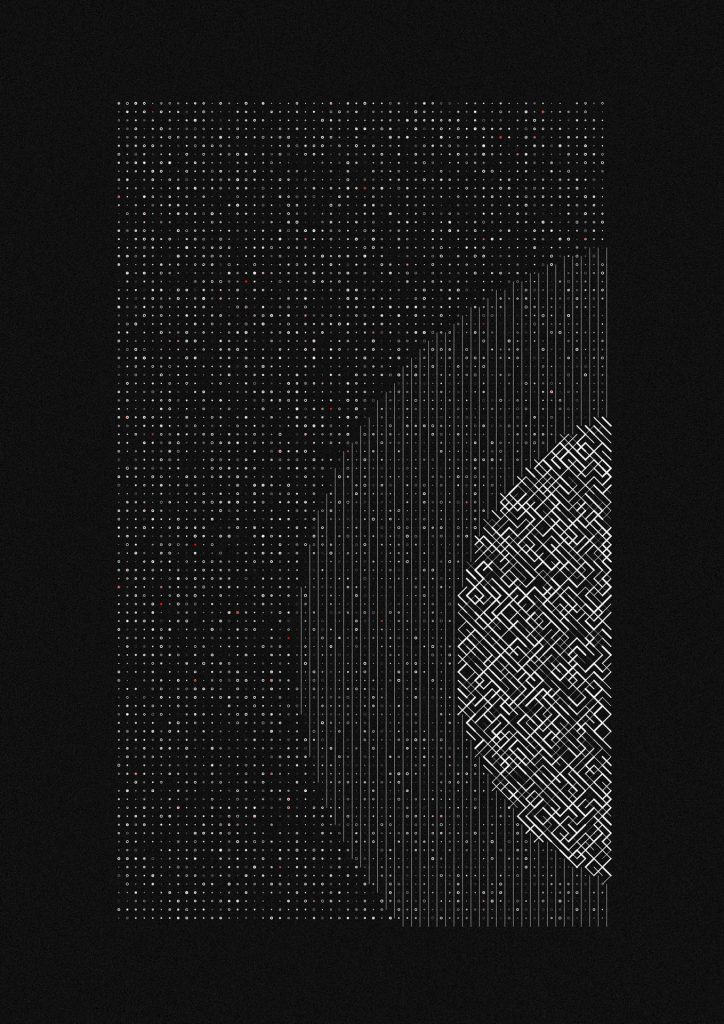
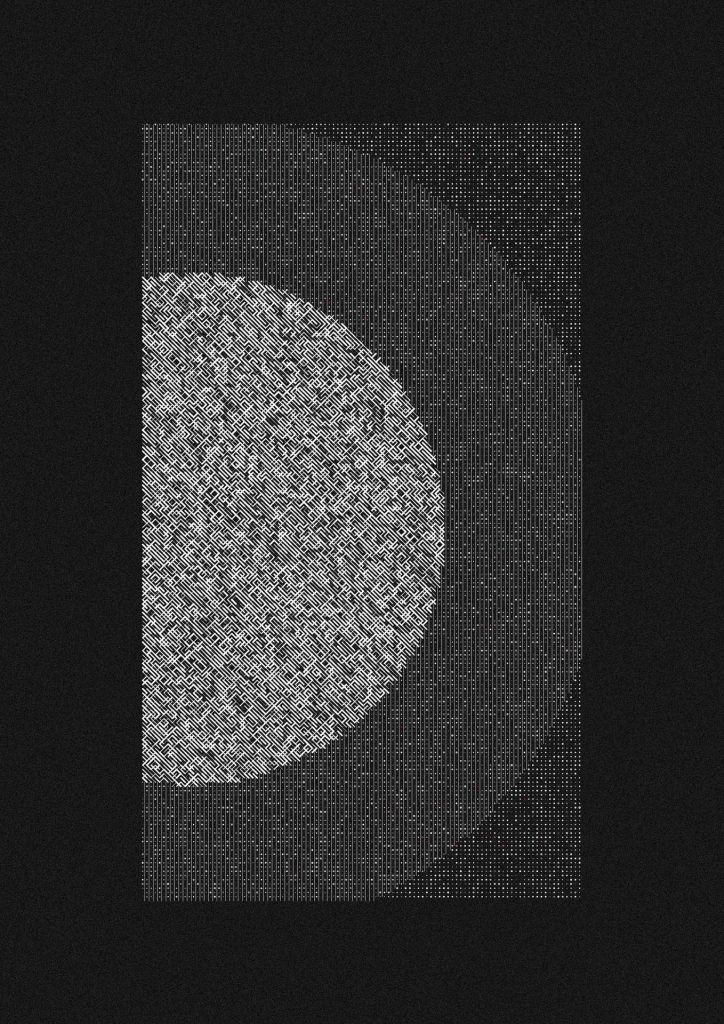
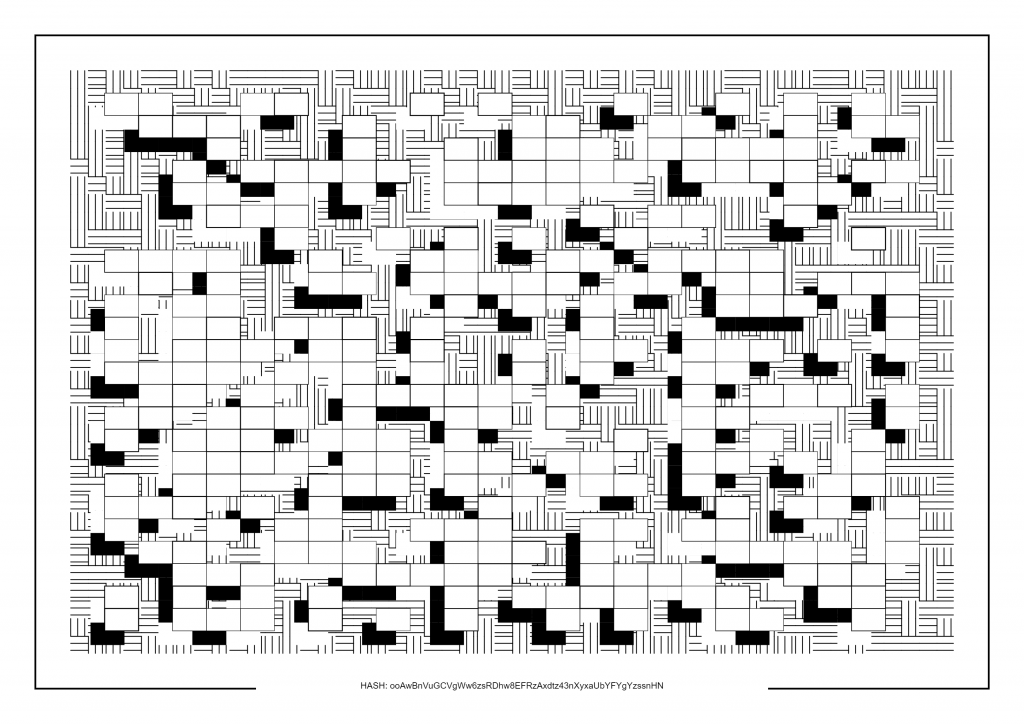
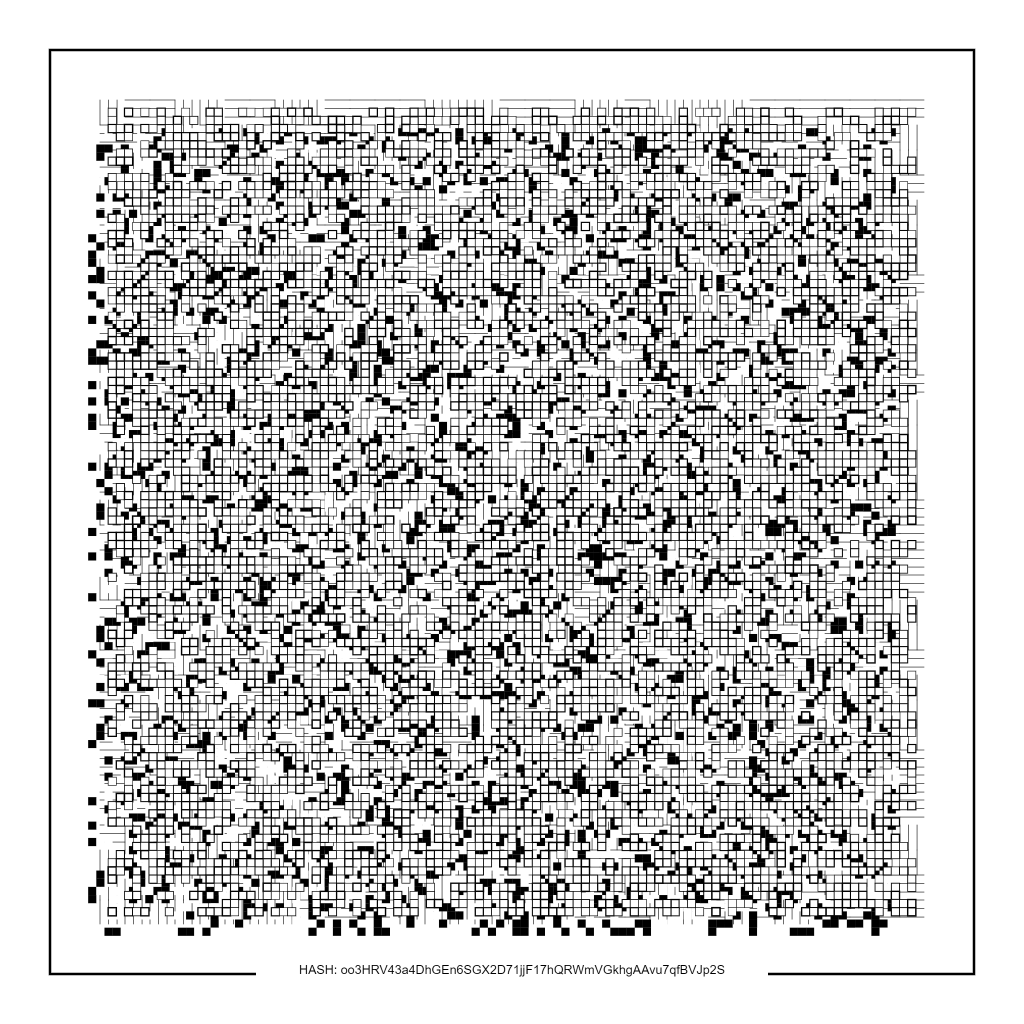
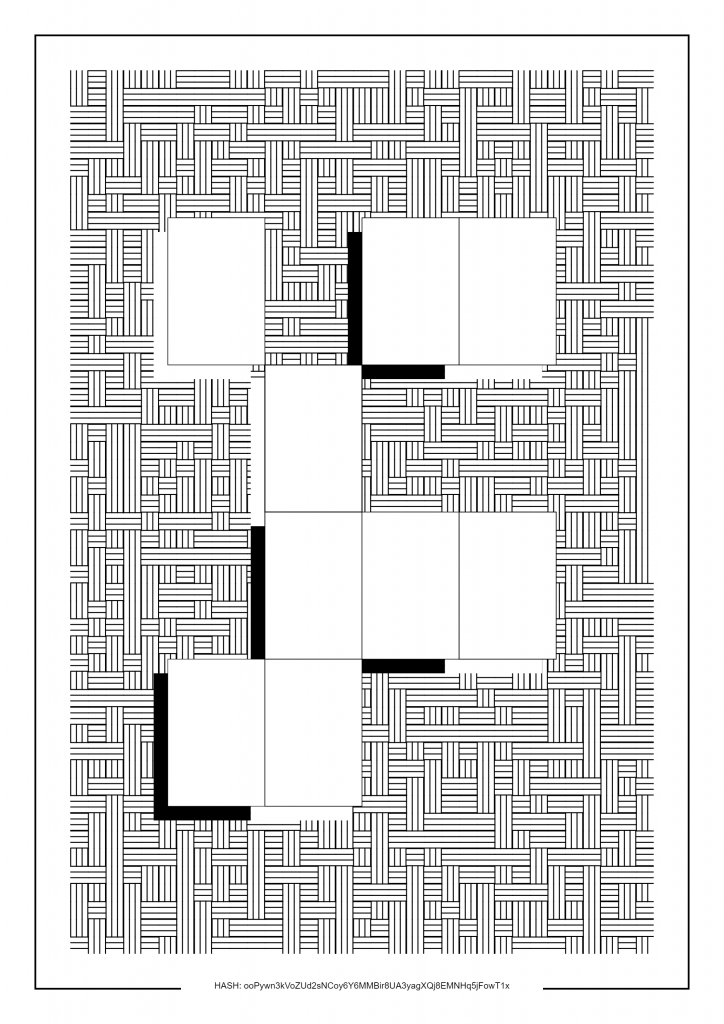
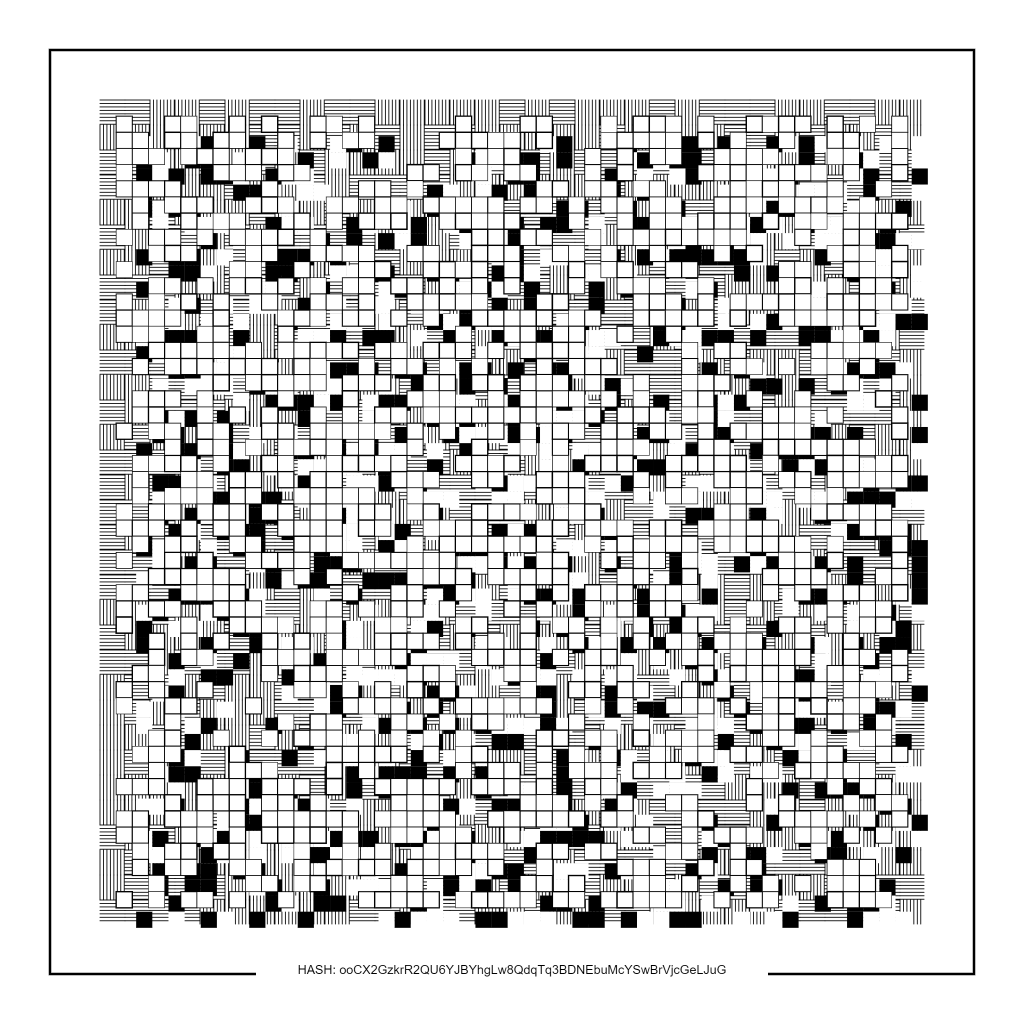
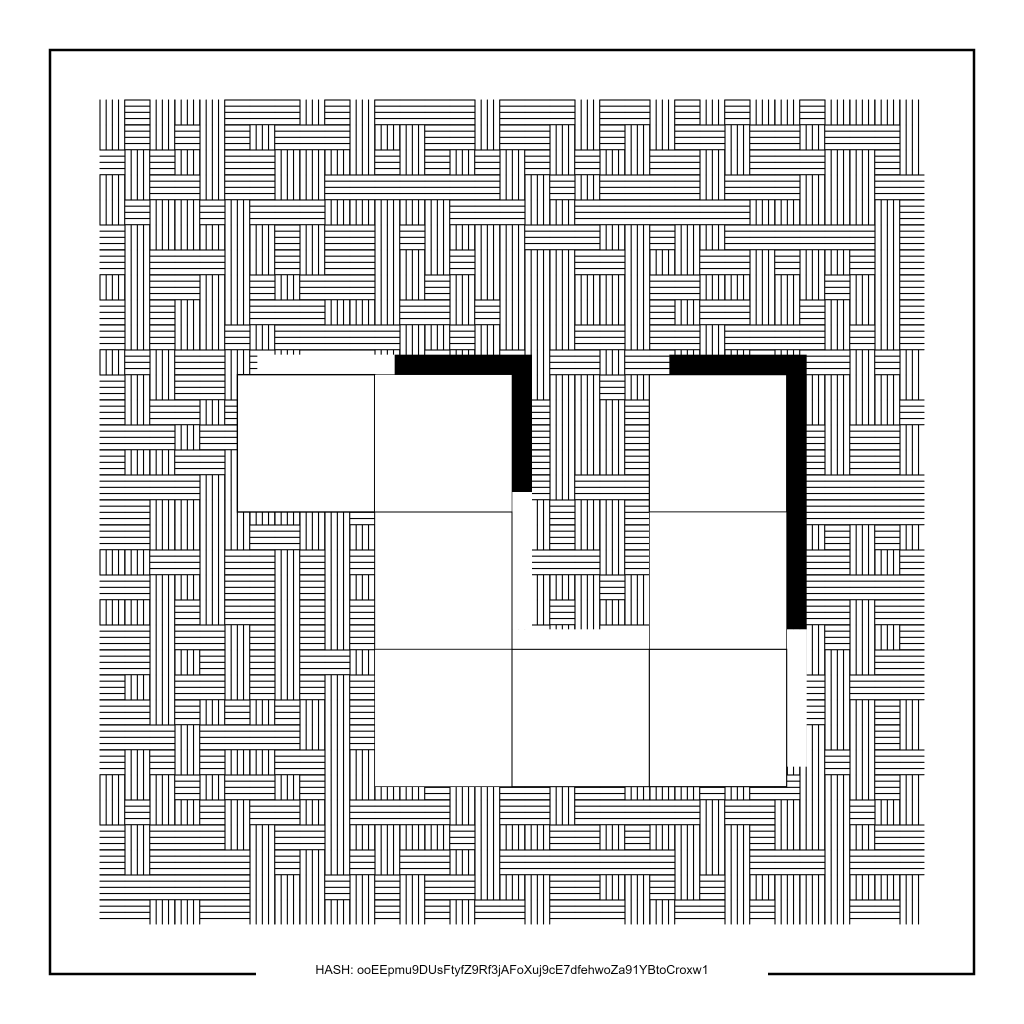
I drew this piece like a score of squares. Each parameter—palette, margin, offset, amplitude—slightly unbalances the whole. The system is strict. But it slips. It trembles a little. It’s generative, made in p5.js.
I like when logic becomes pattern. When error melts into order.
Squares on squares is a surface game, a minimal micro-story.
A noiseless night. A moon too full. I drew this mountain line by line, guided by Perlin noise. The landscape unfolds live, slowly, with no way back. It’s not animation. It’s buried motion.
It’s not animation. It’s buried motion.
I code like I breathe. Slowly. I wanted quiet tension. Silent gravity.
I built this series as a study of the cycle. An organic, almost cellular motion, generated over 128 iterations. Each image grows, saturates, folds back on itself. The trace becomes memory, the loop a living form. I wanted the code to breathe. To fail, sometimes. I corrected nothing.
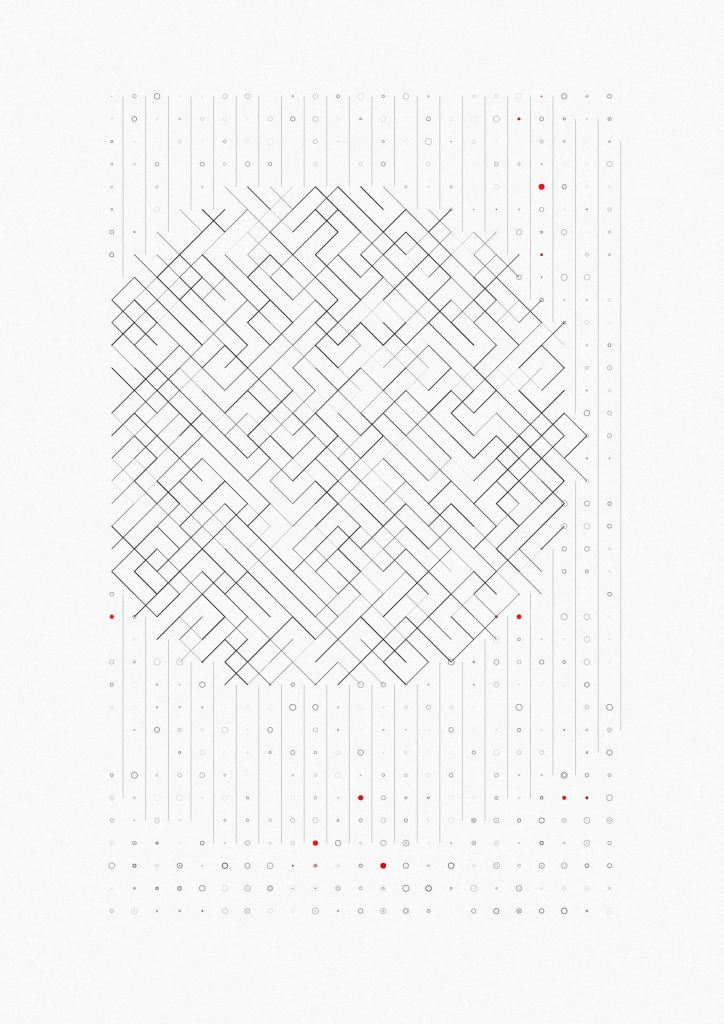
I wanted to explore abstraction through restraint. Each piece is generated from the same system, but I push variation through color and density. The p5js code draws continuous, vibrating lines—almost organic. There’s depth, but no excess.
Everything is held in. Just at the edge of saturation.
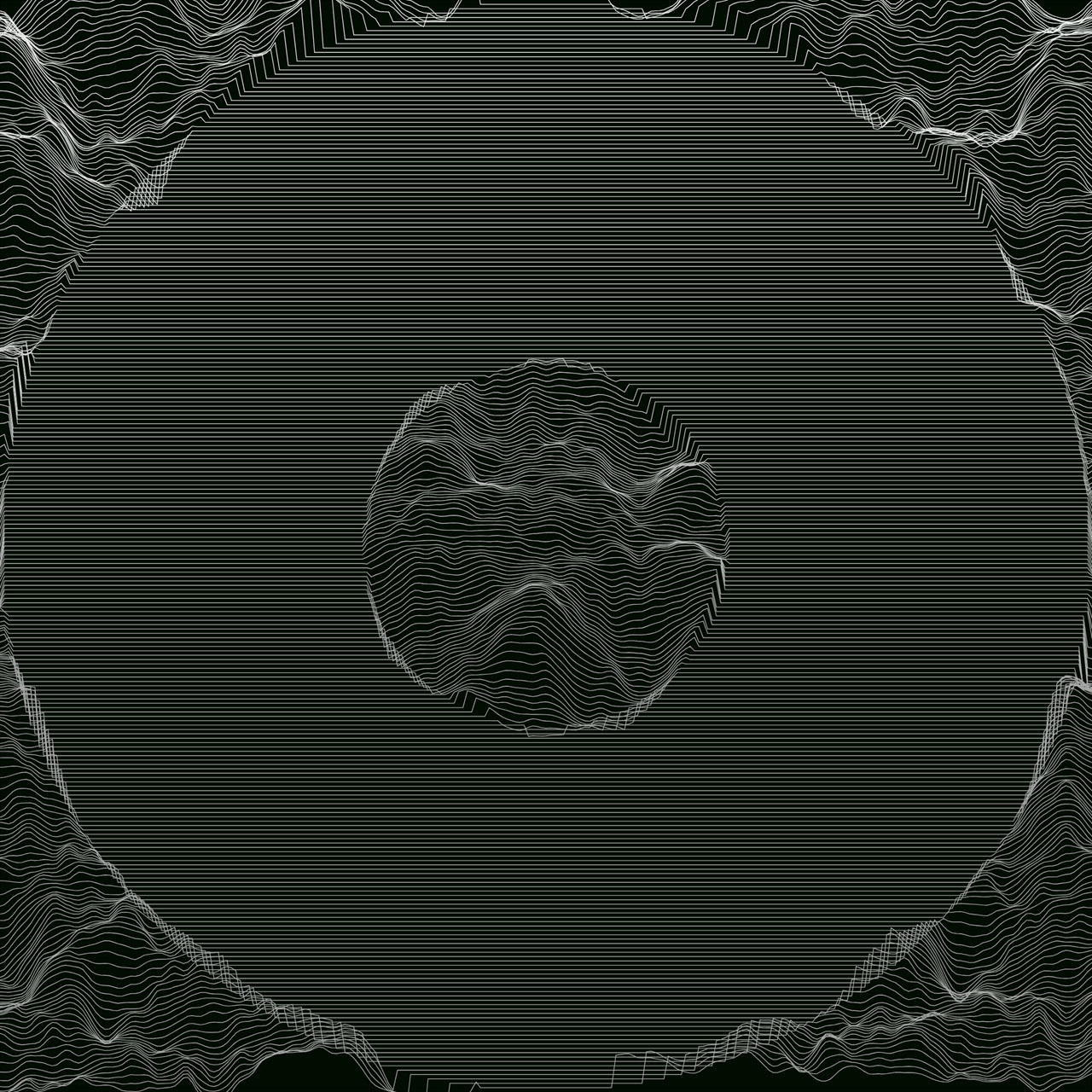
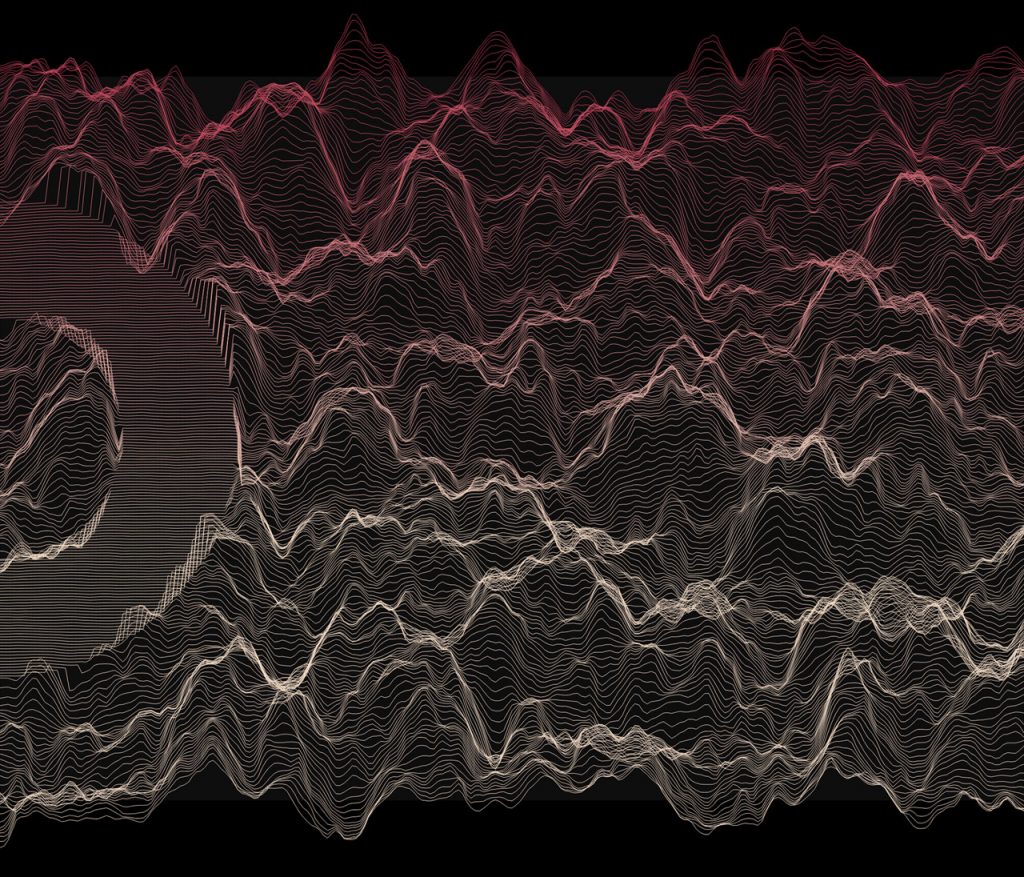
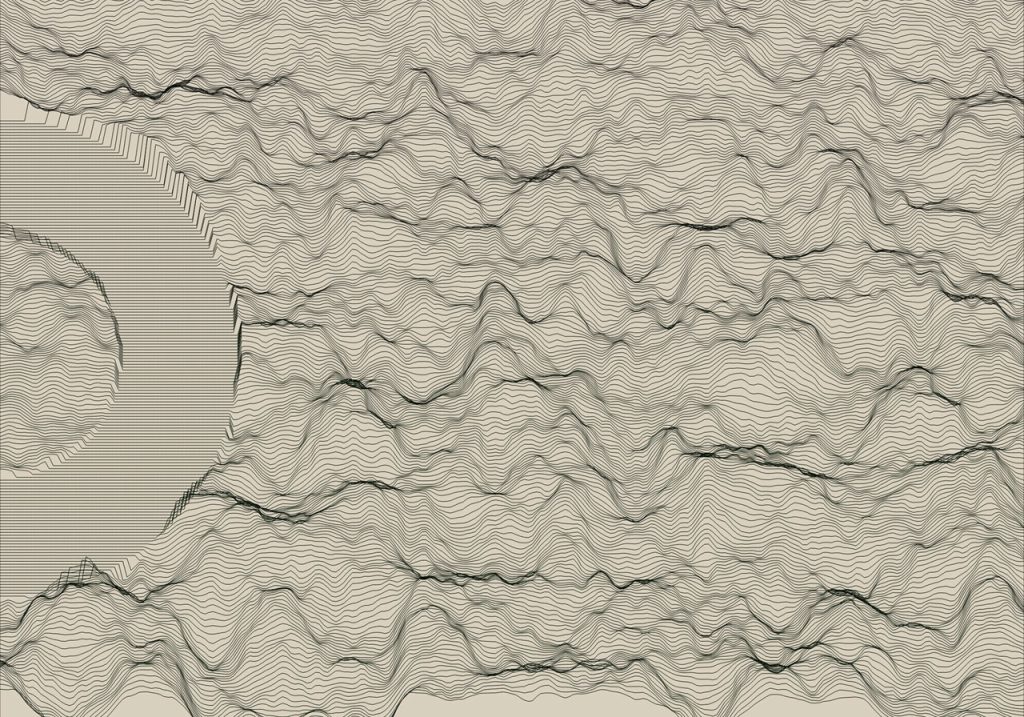
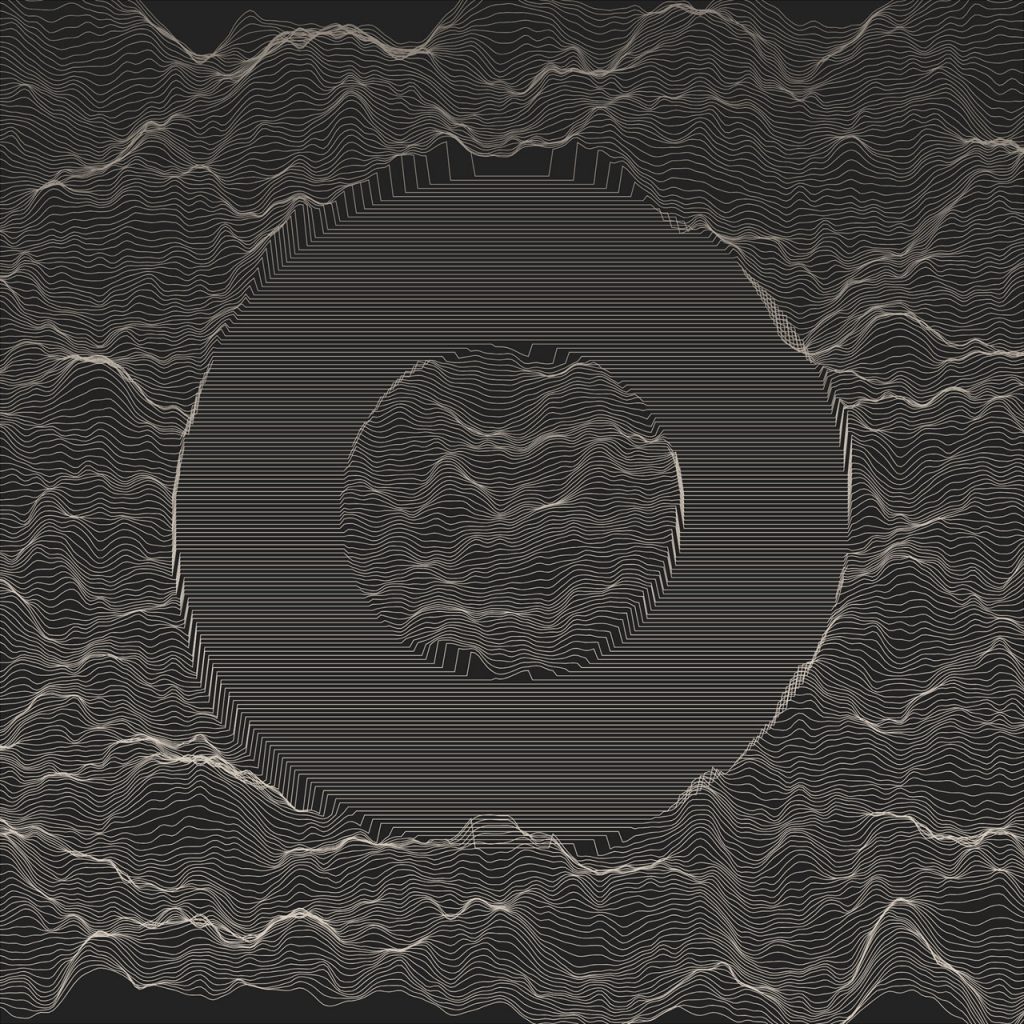
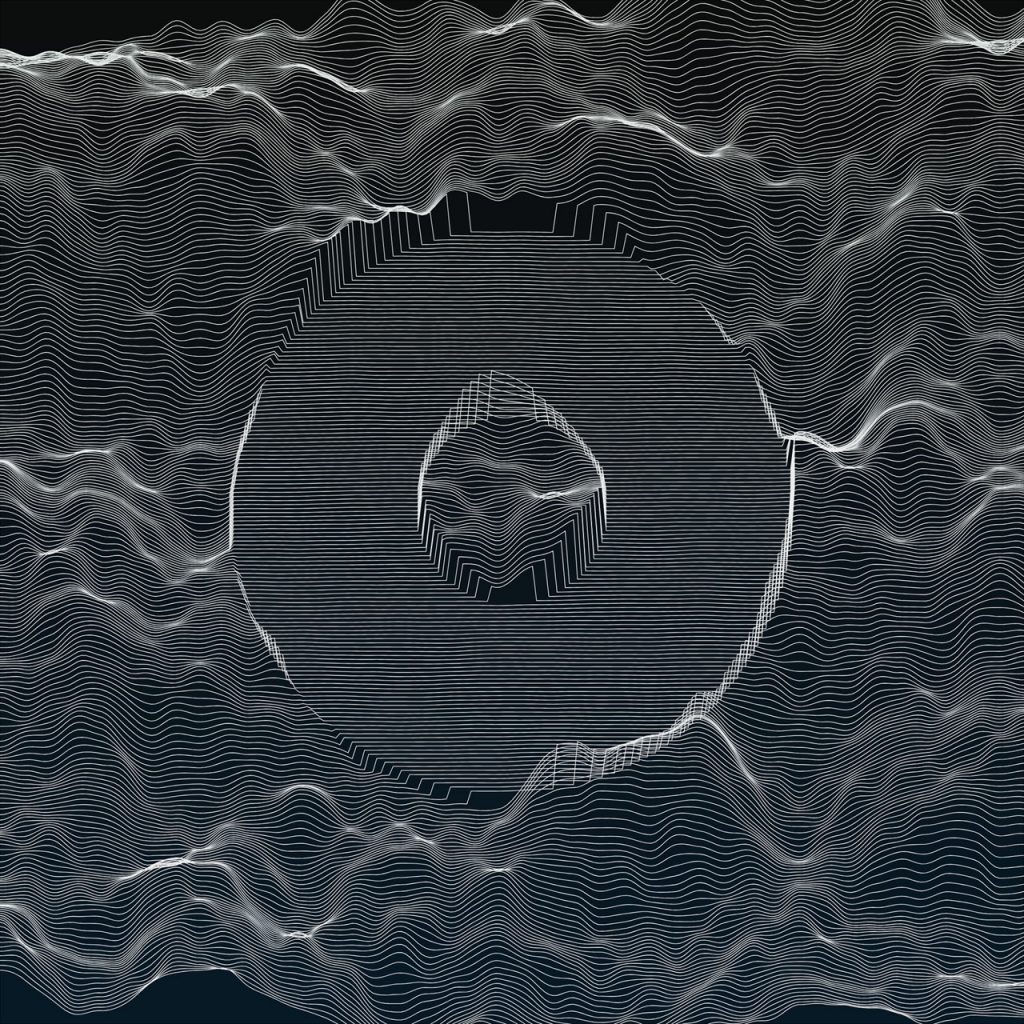
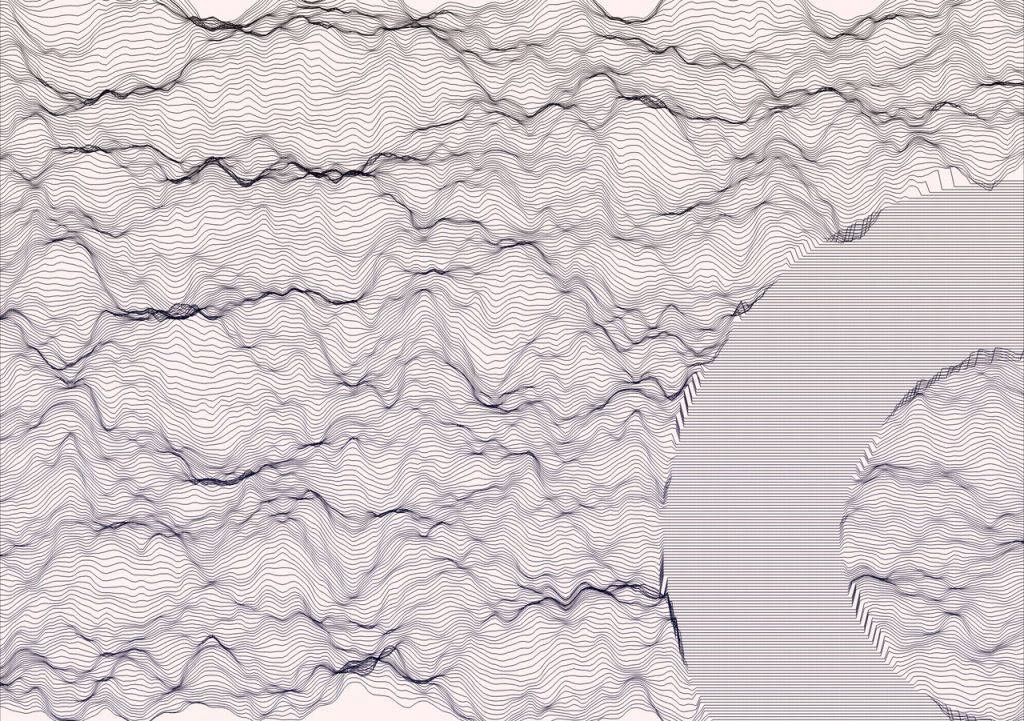
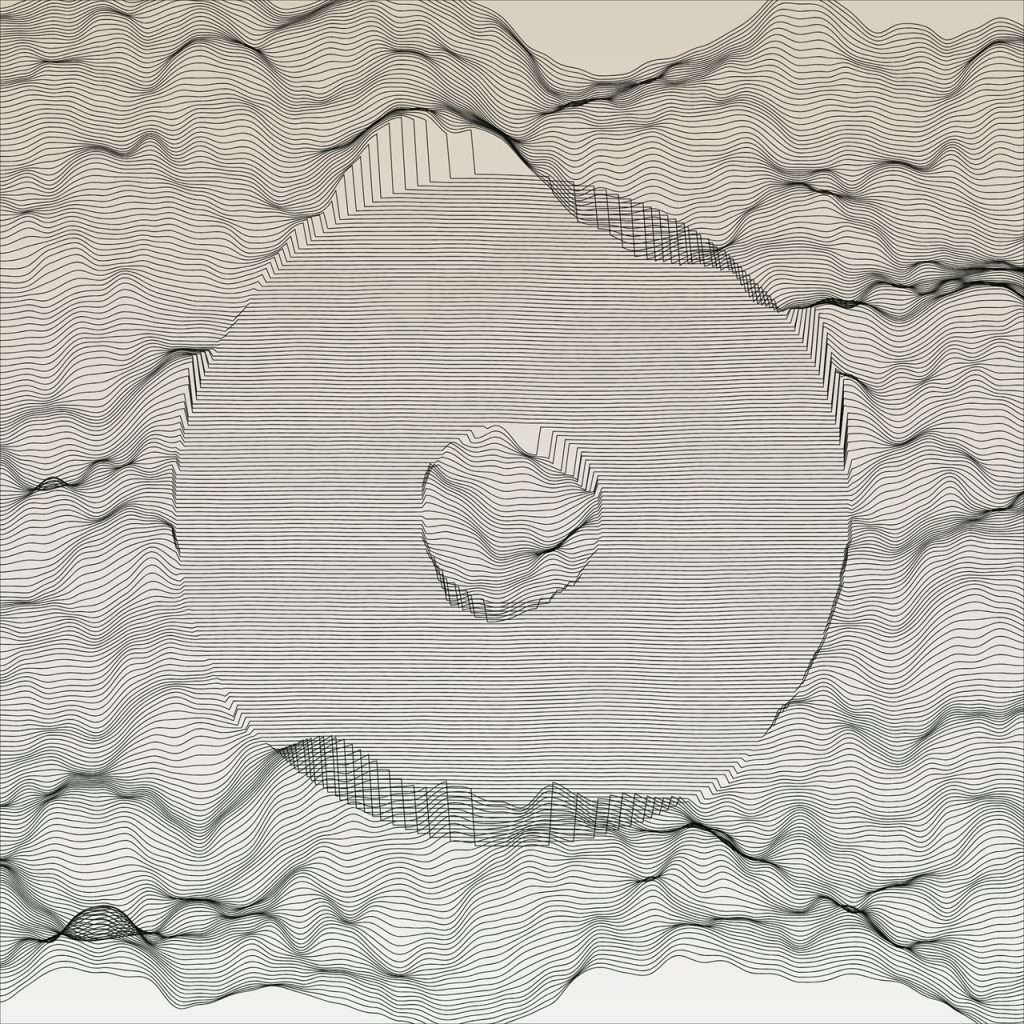
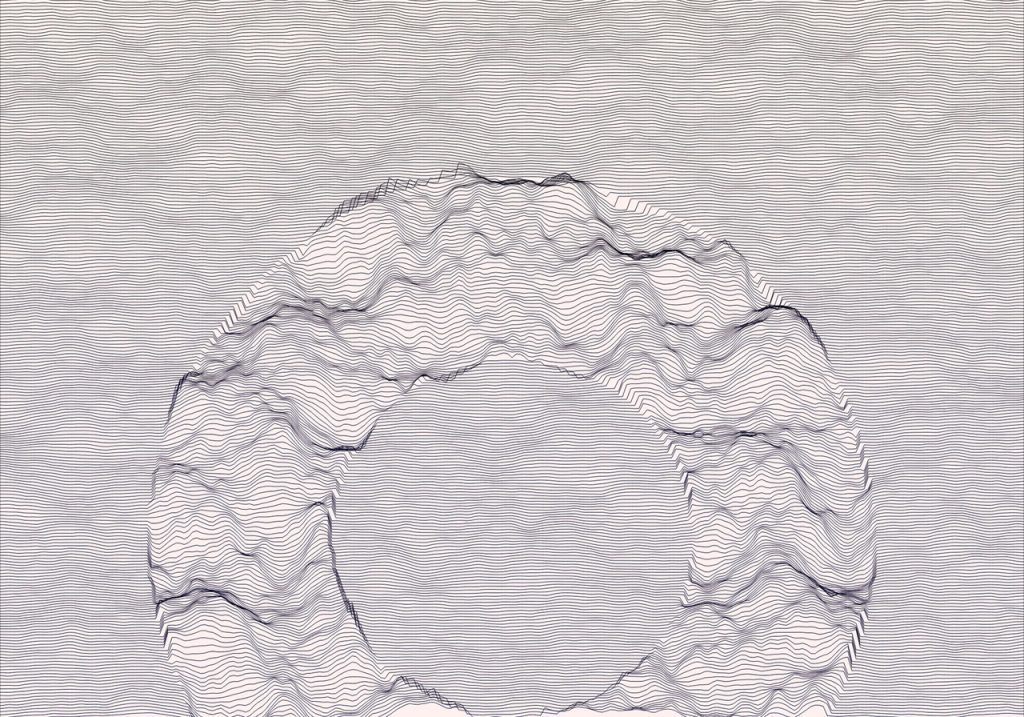
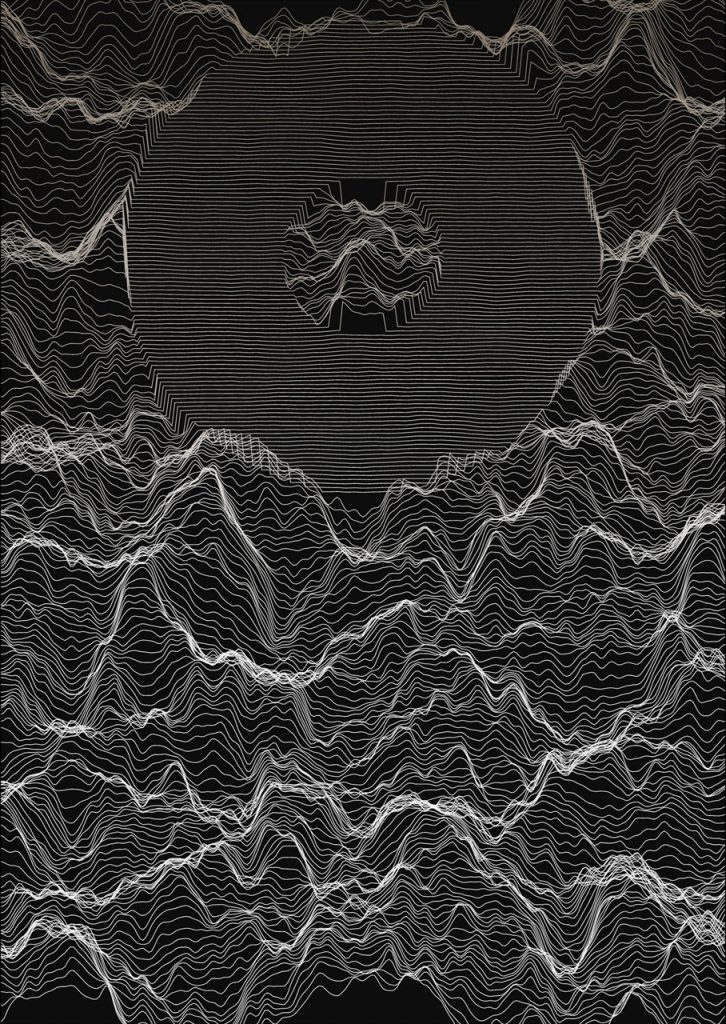
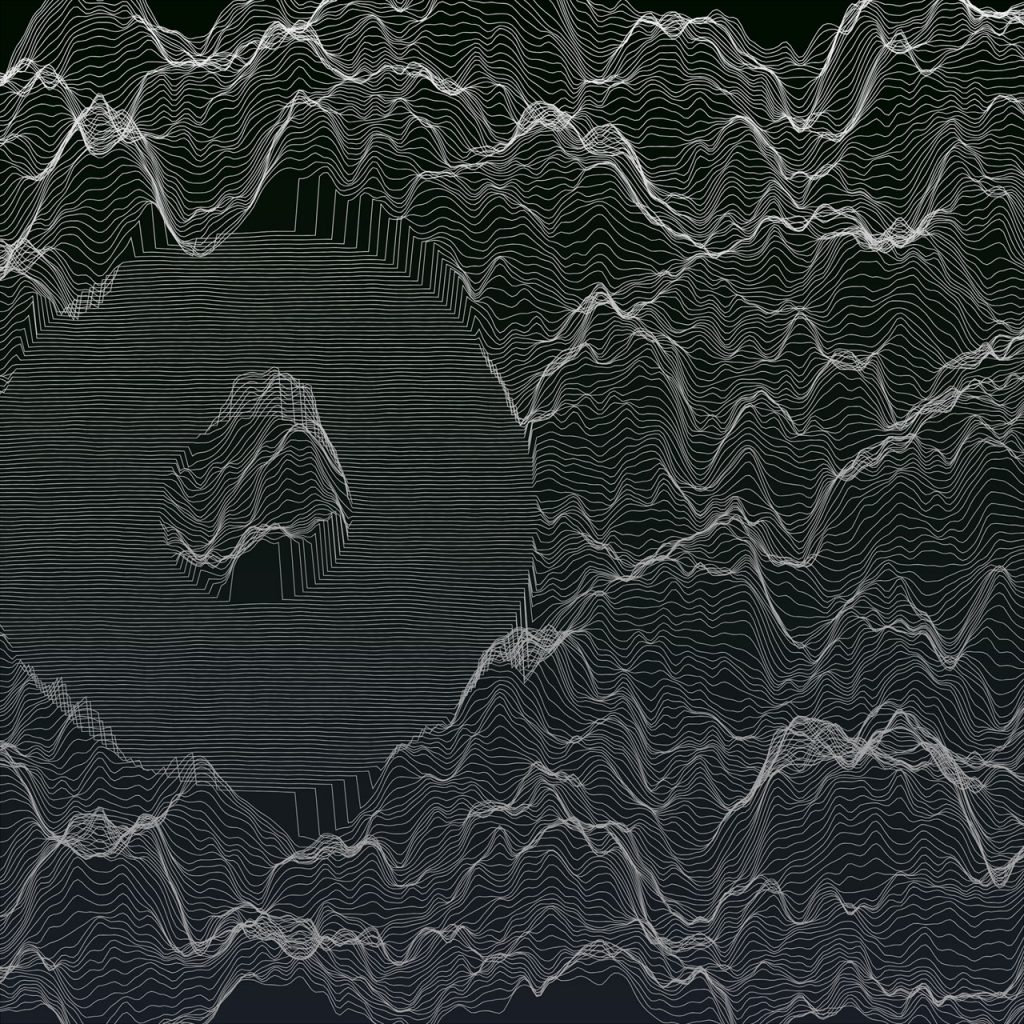
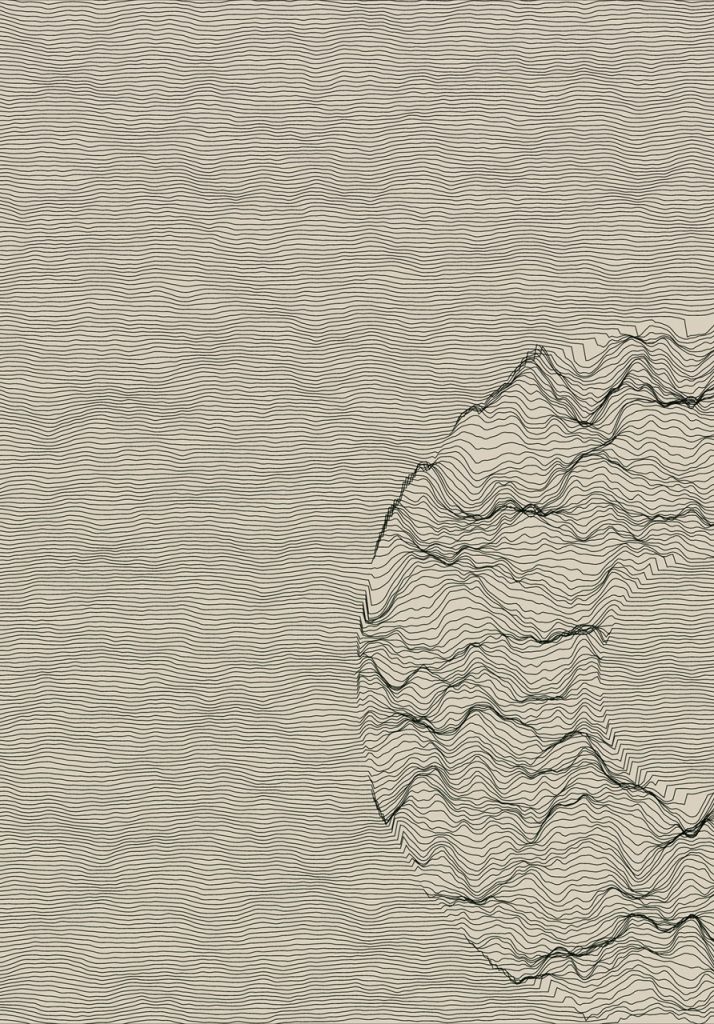
I coded a generator in p5.js, built on Perlin noise, where each wave grows in friction with a circle. The 128 variations were minted on FxHash — each iteration emerged from a collector’s gesture. Each mint brings a new drift, a different tension, a sensitive topography.
Each wave grows in friction with a circle.
The circle isn’t a center. It’s a threshold, an edge, a shifting constraint. I designed this collection for plotter lovers, with SVG exports ready to scratch the surface.
echno Cluster is a series born from collisions. Forms exported from Blender, then recomposed, glitched, redeployed with p5.js. I wanted to create tension — between rigid geometries and organic masses, between abstraction and cosmic grounding.
I don’t control everything I build in the crack.
The modules seem to float, but everything is under pressure. A structure emerges from chaos, almost by accident. I let technical errors infect the composition, until it reaches saturation.
It was during a reflective evening that the warm crackle of a vinyl record came to life under the needle of my faithful Technics SL1210 turntables. The Doors’ album ‘Waiting for the Sun’, a cherished disc I hadn’t spun in ages, began to spread its psychedelic aura throughout my studio.
Each crackle of the vinyl was a reminder of the golden years, each melody a journey through time. Morrison’s voice, more alive than ever, wove its way through the veil of the past, transporting me back to an era where music and poetry merged to capture the zeitgeist.
In this suspended moment, ‘Harmonic Chaos’ was born. Carried by the waves of ‘Love Street’ and ‘Spanish Caravan’, my keyboard became the instrument of my reminiscence. The lines of code started to dance with the music, and as if by magic, the iterations began to emerge, capturing the soul of a bygone era in a series of images where minimalism meets abstraction.
The poem, a creation by ChatGPT immersed in the spirit of Morrison, echoes that evening when music transformed inspiration into visual art. It tells the story of ‘Harmonic Chaos’, a tribute to the night when a legendary album redefined the contours of my creativity.
A silent symphony
In the silent void where whispers dwell, Amidst the Harmonic Chaos’ spell, The lines, they dance, the shadows play, In ordered disarray.
Patterns born of the abyss’ whim, Singing a cosmic, silent hymn. An architect of chance’s hand, Drawing stories in the sand.
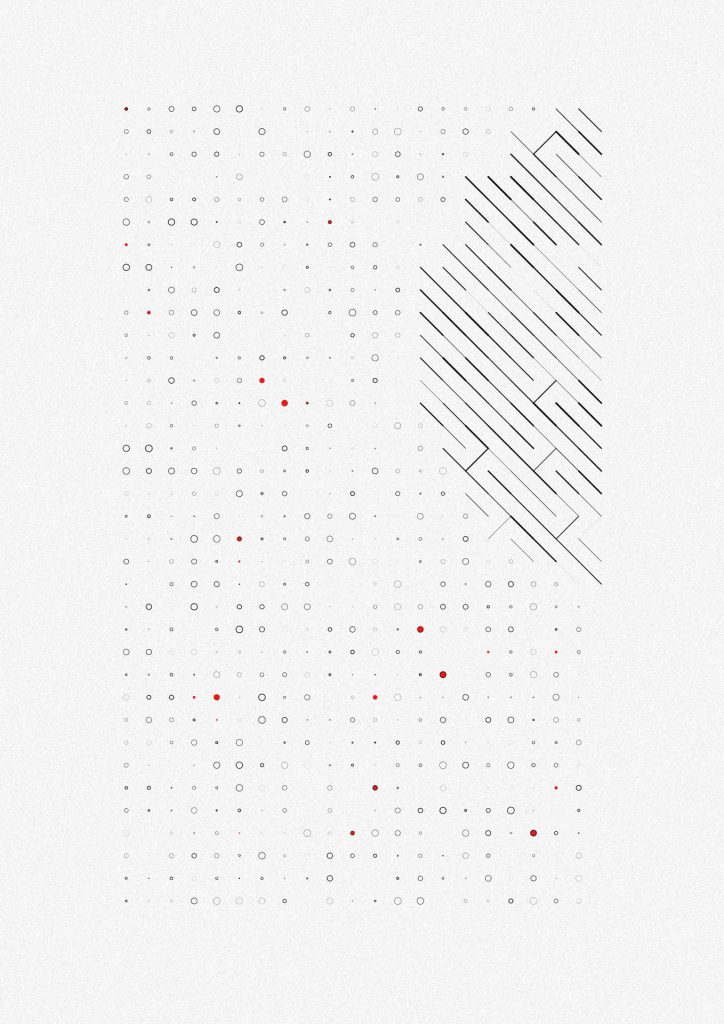
Each dot a note, each line a verse, A universe’s heart, dispersed. A labyrinth for the mind’s eye, Where echoes of the stars lie.
An echo of the endless night, Where dreams take wing in flight, Through Harmonic Chaos, wild and free, We touch the face of eternity.
Poem written by ChatGPT as Jim Morrison contemplating this iteration series.
Inspired by Les Humanoïdes Associés, a comic book publishing house founded in December 1974 by Mœbius, Jean-Pierre Dionnet, Philippe Druillet, and Bernard Farkas.
In the intricate fabric of the digital realm, landscapes come to life, inspired by the visionary spirit of Les Humanoïdes Associés. On the screen, each geometric shape and line of code transform into fragments of alternate realities. Here, programming is not just a tool, but a gateway to unexplored worlds, where mountains rise like visual poems under skies woven with digital stars.
This is an invitation to traverse horizons where technology intertwines with the imaginary, offering each viewer an escape into the boundless.
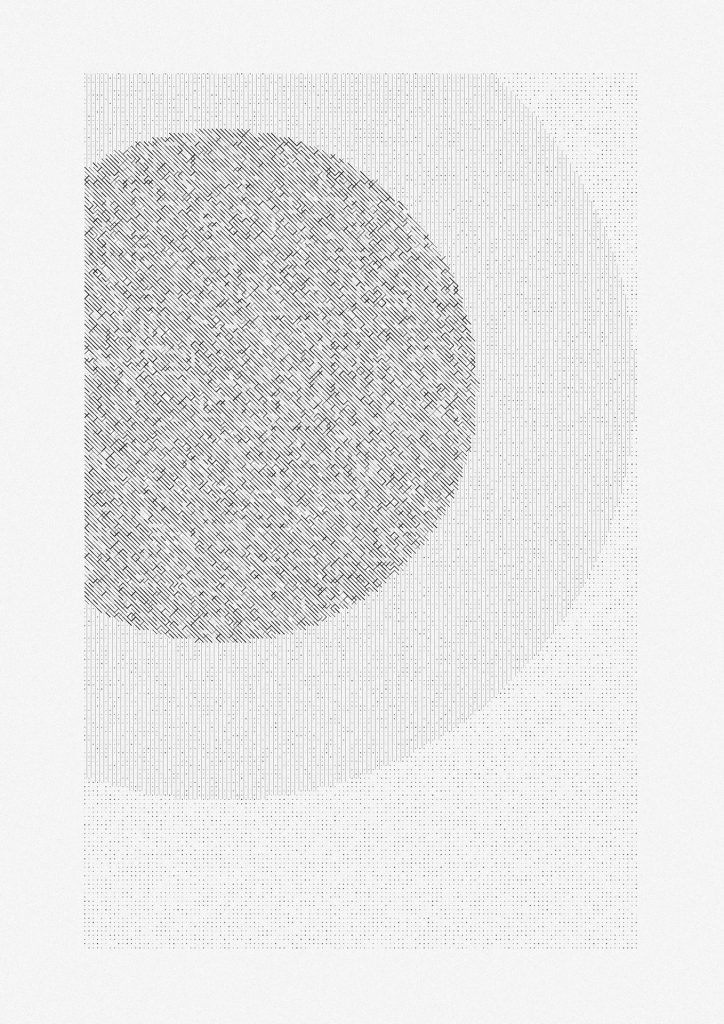
Minimal in appearance but complex in nature, it’s an invitation to explore the tension between repetition and randomness. The elegant juxtaposition of blocks and voids, lines and spaces.
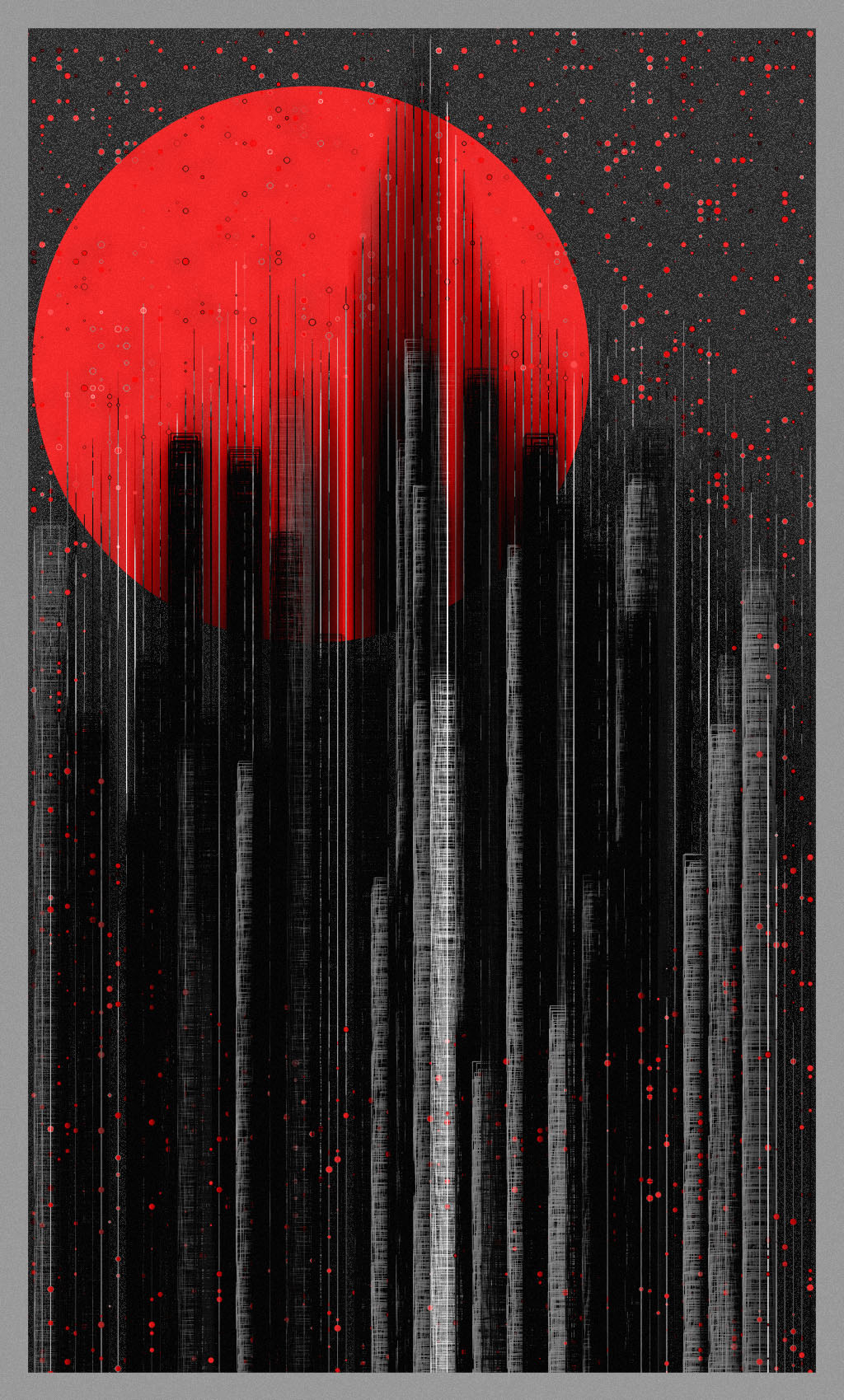
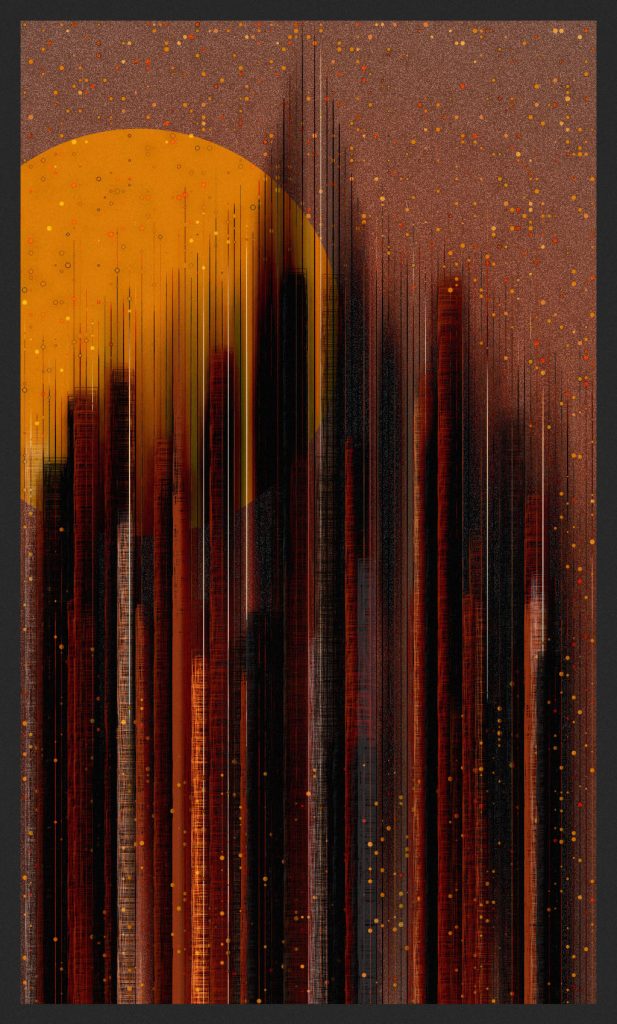
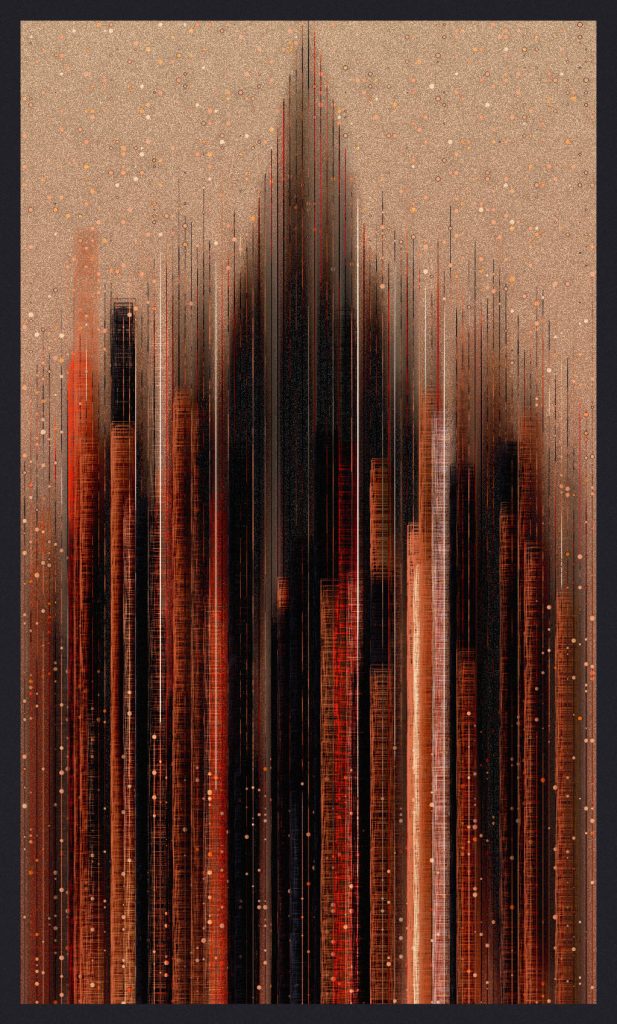
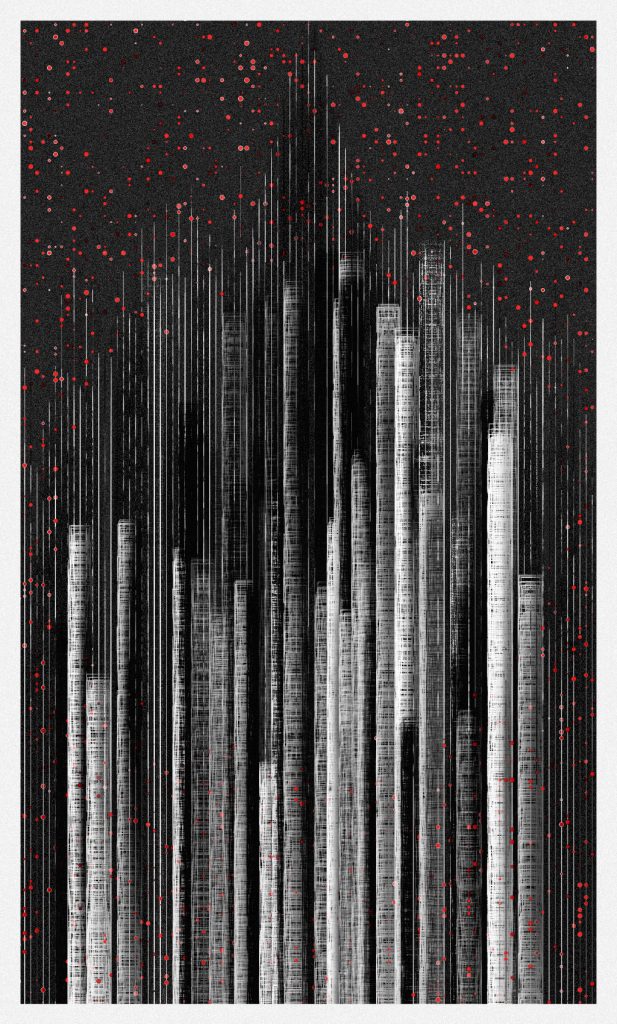
“Techno City” stands as a cyberpunk metropolis, where neon lights clash with the oppressive darkness of the streets. Entirely crafted through generative art and P5JS code, this piece portrays a city where technology reigns supreme, creating a landscape both captivating and unsettling.
Where neon lights clash with the oppressive darkness of the streets
Each glimpse of “Techno City” is unique, with algorithms constantly reshaping the contours of this dystopian cityscape. In this realm, past and future coexist, bearing witness to a world where humanity stands at a crossroads, torn between hope and desolation.